
How to Search the Lenoir County Court Docket
Start a Lenoir County court docket search at the official North Carolina eCourts Portal. Two tools live there. Pick Smart Search to pull up a case. Search Hearings covers a setting still ahead. A case number or a name in last, first order works in Smart Search. The number tends to be the tighter route. Narrow the statewide system to Lenoir with the Location selector. Then layer on a compatible case type or status filter once the name or number is in.
One limit is worth knowing before a broad Lenoir County name search. When 200 results come back, the Portal guide says to add a permitted filter. It says not to run the same search again. Birth dates stay masked in ordinary results. So a name search should never hinge on gathering sensitive identifiers. A missing result has many possible causes. It could be a spelling slip, a format mismatch, the wrong county, a restriction, or simply no matching record.
- Open Smart Search and enter the Lenoir County case number or name.
- Select Lenoir in the location choices when the result needs county narrowing.
- Use case type or status only after the basic Lenoir County search runs.
- Open the selected case number to view the Register of Actions or Case Summary.
- Use Search Hearings, the calendar, or the clerk to confirm a Lenoir County setting.
Lenoir Court Docket Portal Search
Lenoir County is part of eCourts. That means the public Lenoir court docket reader is the statewide Portal. It is not a county-branded database. Smart Search takes a record number or a person name. A citation number works too through Advanced Search Type. Case filters cover location, party criteria, case type, and case status. None of them runs alone. That design actually helps a Lenoir court docket search, since a statewide list can bury the useful result under an overly broad name.
The Portal also offers a separate Judgment Search and a Make Payments function. Judgment Search is only an index view. For current amounts, the official guide sends users back to the Register. It also points them to the county clerk. Make Payments shows eligible balances only. Seeing a payment screen does not mean every Lenoir citation can be paid online. Nor does it mean an appearance is unnecessary. The written notice, the current Lenoir case record, and the court settle those questions.
| Lenoir Portal field | Use | Search limit |
|---|---|---|
| Case number or name | Required basic starting criterion | Use last, first order for a person name |
| Location | Narrows a Lenoir court docket result | Optional after basic search |
| Case type and status | Refines a Lenoir result | Must fit the selected case type |
| Citation Number | Advanced route for eligible traffic identifiers | Use the citation as written |
What a Court Docket Shows
Online, a Lenoir County court docket usually appears as a Register of Actions. It may also show as a Case Summary. Think of it as a dated, structured rundown of public court activity. The entries come from the clerk’s official file. It is not a narrative. It is not a certified record either. A result can display the case identifier, court location, parties, public events, and hearing history. It may also show disposition or status information plus any financial or judgment context that is available. Read each item in date order.
The document view stays narrower than the official Lenoir County file. Sealed, confidential, and sensitive-content documents sit outside ordinary Portal access. An old hearing event is not proof of a current setting. A historical judgment amount may still need clerk confirmation. Use the Lenoir County court docket to find the public chronology. The Clerk of Superior Court holds the full official file and can issue a certified copy.
| Case number | The link that opens the Lenoir Register of Actions. |
|---|---|
| Court and location | The Lenoir division or county allocation for the displayed case. |
| Events | Public entries arranged in chronological order. |
| Hearings | Past or listed settings that require current calendar confirmation. |
| Status and disposition | Public case state and outcome information where available. |
| Financial information | Reference information that may require Lenoir clerk confirmation for current amounts. |
For numbers on filings, pending cases, and dispositions statewide, turn to the official North Carolina court-statistics gateway, which publishes the state report families that keep those categories distinct.
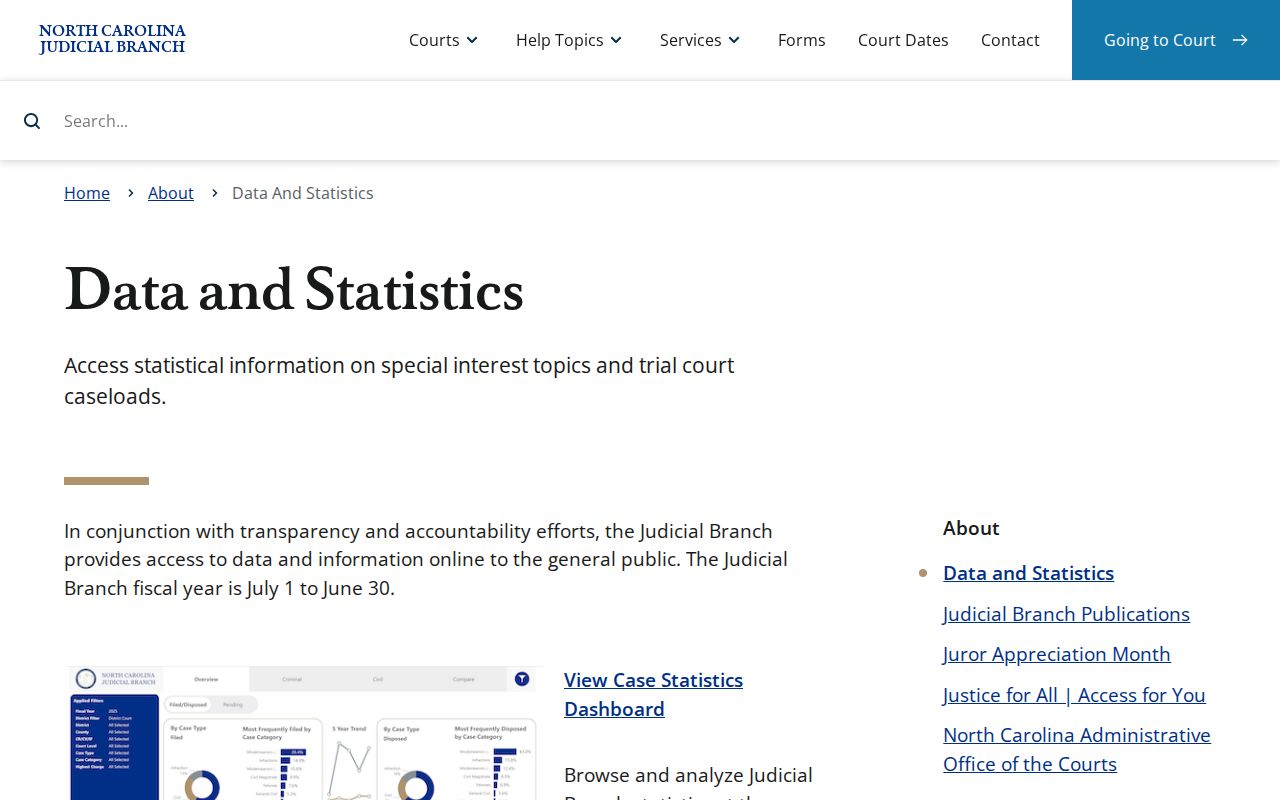
The source page posts no static Lenoir County filing total. It is still useful. It explains why court docket events should never be confused with arrests, unique people, or a generic search count.
Lenoir Court Docket and Official File
In Lenoir County, Register of Actions means the public summary of eligible docket entries. The entries are drawn from the clerk’s official record. It is a fine way to follow a case’s timeline. But it is expressly not the official court record. When a certified judgment, order, Register, or other official document is needed, a Lenoir County reader should request it from the Clerk of Superior Court. Don’t trust a screen display.
The same distinction shapes how a Lenoir County court docket status reads. Pending means no final resolution shows in the displayed classification. Disposed signals a recorded resolution. Still, the disposition detail deserves a look before any assumption about the outcome. Appealed, Trial De Novo, or Transferred to Superior Court can point toward a later Lenoir case path. Follow that later record instead of stopping at the earlier district-level entry.
- Register of Actions
- The public Lenoir County summary of docket entries in an eligible case type.
- Official court record
- The clerk-maintained Lenoir file or certified record.
- Disposition
- The recorded outcome area of a Lenoir case.
- FTA
- An AOC form/report code for failure to appear.
- CIT
- An AOC form/report code for a citation number.
Which Courts Keep Dockets
Lenoir County splits court records between no separate county and district clerks. The Lenoir Clerk of Superior Court serves as the unified practical record keeper for Superior Court, District Court, estates, special proceedings, and magistrate-connected matters. Court level still matters when a Lenoir County court docket is searched. Case type, division, status, and any later transfer history reveal the court path.
Superior Court District 9A is Lenoir’s general-jurisdiction trial division. It handles felony criminal matters and major civil trials. District Court District 9 takes misdemeanors, traffic and other infractions, domestic and family matters, and lower-level civil cases within its jurisdiction. Magistrates handle assigned small claims, summary ejectment, process, and other matters inside the same General Court of Justice system. They do not create a separately branded Lenoir justice-court docket.
| Court or record keeper | Docket covers | Where to search |
|---|---|---|
| Superior Court District 9A | Felonies, major civil matters, and qualifying later trial paths | Lenoir Portal, calendar, and clerk |
| District Court District 9 | Misdemeanors, traffic, infractions, family, and lower-level civil matters | Lenoir Portal, calendar, and clerk |
| Magistrates in the clerk system | Small claims, summary ejectment, process, and assigned matters | Lenoir Portal and clerk |
| North Carolina Court of Appeals | Authorized appeal route from trial court decisions | Separate statewide appellate layer |
Lenoir Court Docket Division Paths
Not every Lenoir County case travels the same road. Traffic tickets and similar infractions usually start in District Court. Felonies and major civil matters go through Superior Court. Appealing a District Court outcome to Superior Court means a brand-new trial there. For a Lenoir court docket reader, the Portal status and any later case number are the telltale signs of which path a case took.
That division guards against two common mistakes. A magistrate phone number is not a docket portal. And an old District Court result may not be the last stop once a case transfers or gets appealed. Check the case status, the court division, and later events before calling a matter closed. A citation, summons, filing, or Portal result usually names the right Lenoir path on its face.
For courthouse access details, the official Lenoir County Courthouse page shows what visitors need to know before they go.
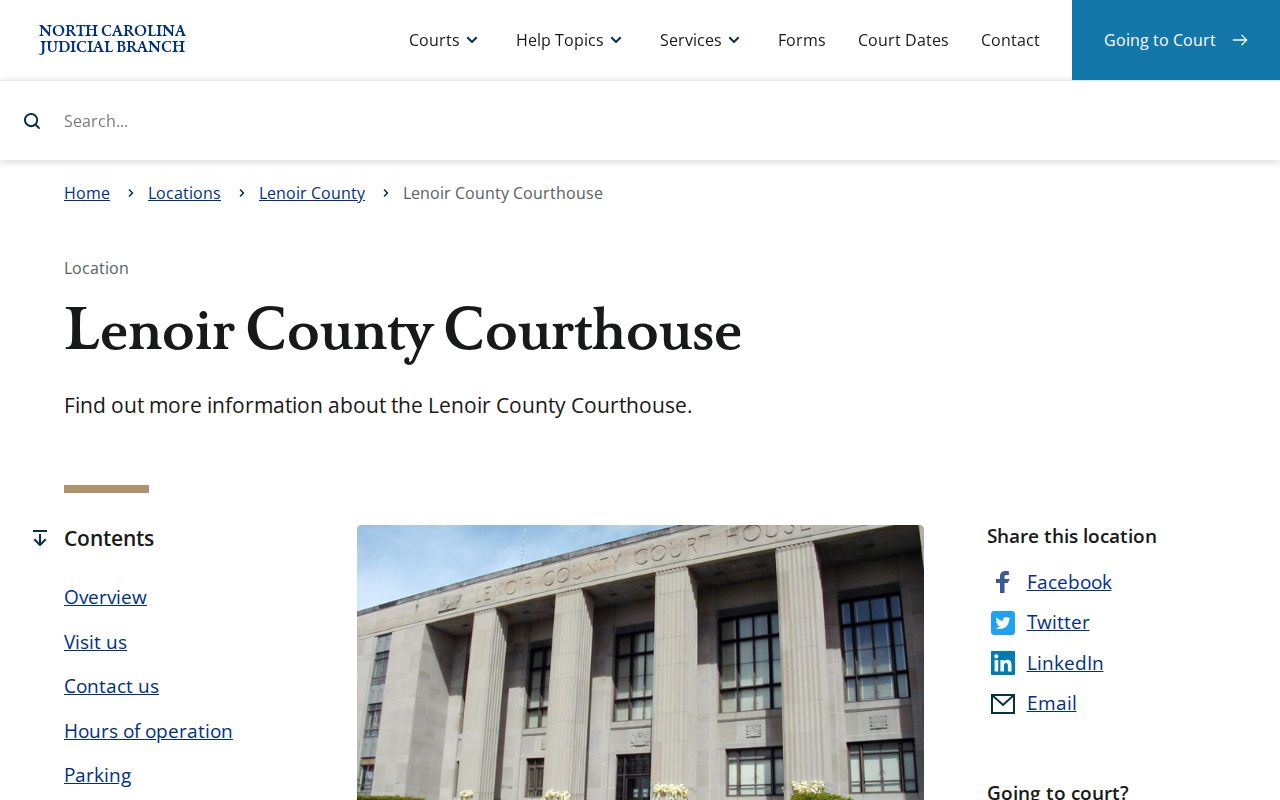
Sometimes the online summary falls short. When a Lenoir County court docket needs a closer look, a paper file review, or a clerk-issued copy, the courthouse itself is where that happens.
Finding Court Dates and Settings
Finding a Lenoir County court date works like a ladder. Start with Portal Search Hearings, which scans eCourts data for a date and time. Next, open the Lenoir Civil Calendars or Lenoir Criminal Calendars link that fits the case type. The Lenoir County Local Administrative Schedules page adds a District Court schedule and points to more calendar resources. When the hearing is near, or two sources disagree, compare the case Register and call the clerk or the assigned court.
Search Hearings asks for location and hearing type first. After that, a Lenoir County user can pick a case number, party name, business name, attorney, judicial officer, or courtroom. Then set a date range. Calendars and the Register answer different questions. The Register shows event history for the Lenoir case. The better proof is a current calendar. Word from the court also works. That is what shows a hearing still sits on its listed date.
One caution worth keeping. A continuance request does not prove a date moved. The local rules page lists Calendar Request, Notice of Hearing, Request for Peremptory Setting, and Request for Continuance forms. Wait for a later order, a revised calendar, or clerk confirmation before acting on a changed Lenoir setting.
Lenoir Court Docket Calendar Ladder
For any Lenoir County hearing, lean on the most specific current source. Portal Search Hearings covers location, hearing type, identifier, and date range. The county criminal or civil calendar adds the case-type view. The Register of Actions explains earlier Lenoir notices, settings, continuances, and dispositions. Calendars can clash. A calendar may not load. An appearance may be imminent. In all three situations, the clerk and court contacts settle it.
An official Lenoir County calendar can fail to load in a browser. Even so, it remains the official destination. That is the moment to use the documented fallback chain, not some unofficial calendar. The clerk's main courthouse number is (252) 520-5300. The Lenoir County contact directory splits out the clerk, Superior judges, District judges, magistrates, District Attorney, family and custody mediation, and arbitration, so a court-docket question lands with the right office instead of being bounced around.
Public Access to Dockets
Public access to a Lenoir County court docket begins with the clerk-maintained record and the public Portal summary. A reader has options. Search Portal, or use a public terminal at the clerk's office. Inspect a paper file in the county where the case sits. Or ask the clerk for a copy. The ordinary online Lenoir view is reference material only. It will not show every document, every identifier, or every restricted case category.
Some Lenoir County records sit outside routine public view. Sealed court records, confidential documents, sensitive-content materials, juvenile cases, unreturned warrants, and certain special proceedings carry separate limits. A routine Portal result also hides date of birth. When a Lenoir County search comes up empty, the cause could be a restricted record, a format slip, the wrong county, or a case simply unavailable through ordinary public access. Treat a no-result as just that, not as a hint of hidden details.
Key rules:
G.S. 7A-109 supports public clerk records and indexes, subject to confidentiality and sealing limits.
G.S. 7A-308 supplies clerk fee authority for copies, certifications, and a certified county criminal-record search.
G.S. 15A-151 makes expunged court and AOC records confidential.
G.S. 7B-3000 protects juvenile records from ordinary public disclosure.
Lenoir Court Docket eCourts Transition
Lenoir County joined eCourts on April 28, 2025, part of the Judicial Branch's Track 8 conversion. The Lenoir court docket system now runs on Enterprise Justice/Odyssey. The Portal serves as the public reader. File & Serve handles electronic filing for filers. Lenoir County gained online case search, hearing search, public document and record viewing, and eligible online payment access inside the statewide system.
The eCourts switch did not retire the clerk. A current Portal Register helps. Older files differ. An older Lenoir paper or archived file may still need a look at the clerk's office. File & Serve is not the public's Lenoir court docket search. It is an eFiling system for filings and file-stamped acceptance details. Certification and the official file still live at the physical courthouse.
Note: A missing Lenoir online document can simply be a clerk-access issue. Confirm the record channel first. Do that before assuming the document does not exist.
The Clerk and Docket Records
Start with the Lenoir Clerk of Superior Court. That office holds the court docket records for Superior Court, District Court, estates, special proceedings, and magistrate-connected matters. The Lenoir County Courthouse sits at 130 S Queen Street in Kinston. Mail goes to PO Box 68, Kinston, NC 28501. The main number is (252) 520-5300. Walk in to inspect a file, order a copy, or sort out a Portal result.
Copy prices follow the published fee schedule. A plain copy runs $2 for the first page. Each additional page or fraction costs $0.25. Certified copies add a $3 certificate under seal, and exemplification is $10. A certified county criminal-record search on form AOC-CR-314 costs $25. Ask the Lenoir clerk to total your order, since no universal turnaround or electronic-ordering process exists.
Lenoir Clerk of Superior Court
130 S Queen St, Kinston, NC 28501
Mail: PO Box 68, Kinston, NC 28501
(252) 520-5300
File inspection, public terminals, plain and certified copies, clerk record questions, and cashier routing.
The official Lenoir court contact directory is the source for the county court-contact routing.
The directory keeps the Lenoir clerk distinct from judges, magistrates, prosecutors, mediation, and arbitration contacts. Each plays a different role, so match your question to the right office.
Lenoir Court Docket Courthouse Access
A Lenoir court docket only goes so far online. The courthouse is where you reach the official file. Weekday public hours run 8:00 a.m. to 5:00 p.m., with parking behind the building and entry near the magistrate office. Clerk-office self-service terminals let the public search criminal information by name, case number, victim, or witness, and civil, special-proceeding, and estate records sit in the appropriate system.
Local sources say nothing about terminal counts, kiosks, security rules, copy cutoffs, or archived files, so assume nothing. Call ahead. Ask about same-day access, accessibility needs, interpreters, and whether a Lenoir paper file has already been pulled. One more local detail. Small claims now hears cases on the first floor of the main courthouse, in the former County Commissioners Meeting Room.
Court Dockets by City in Lenoir County
Lenoir County's official July 1, 2024 municipal data lists four incorporated municipalities: Kinston, La Grange, Pink Hill, and the Lenoir portion of Grifton. None of them runs its own municipal court, city docket, or city payment portal. State traffic and infraction cases flow into Lenoir District Court, the Clerk of Superior Court, and the eCourts Portal instead. The agency that wrote the ticket does not keep the Lenoir court record.
Kinston Court Docket
Kinston police activity can lead to a Lenoir state case, while the clerk keeps the court record and setting.
La Grange Court Docket
La Grange uses Sheriff-contract enforcement context, but the Lenoir clerk and Portal hold the court case.
Pink Hill Court Docket
Pink Hill Town Hall and police contacts are distinct from the Lenoir state-court record route.
Grifton Court Docket
Read the county on a Grifton citation before choosing Lenoir or Pitt court channels.
Kinston’s official city information supplies local-government context, not a Lenoir court interface.
Kinston holds the county seat, but Kinston City Hall is not the Lenoir court docket counter. It keeps no state-court records and takes no court payments. For town matters, La Grange's official departments page lists contacts and explains the separate local government role.
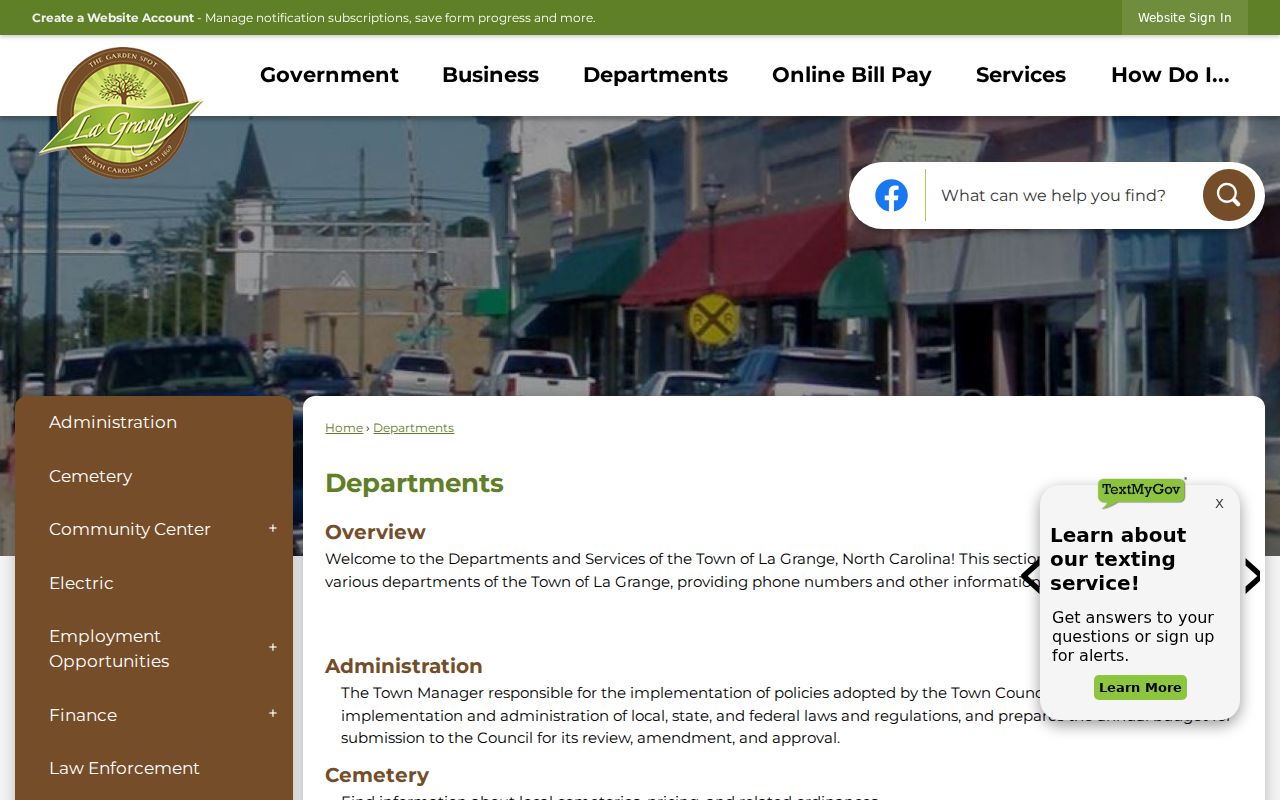
La Grange may get enforcement through the Sheriff arrangement. Still, any Lenoir court docket, hearing, copy, or payment question goes through the state-court channel. Likewise, Pink Hill Town Hall is a municipal contact, not a source of court records.
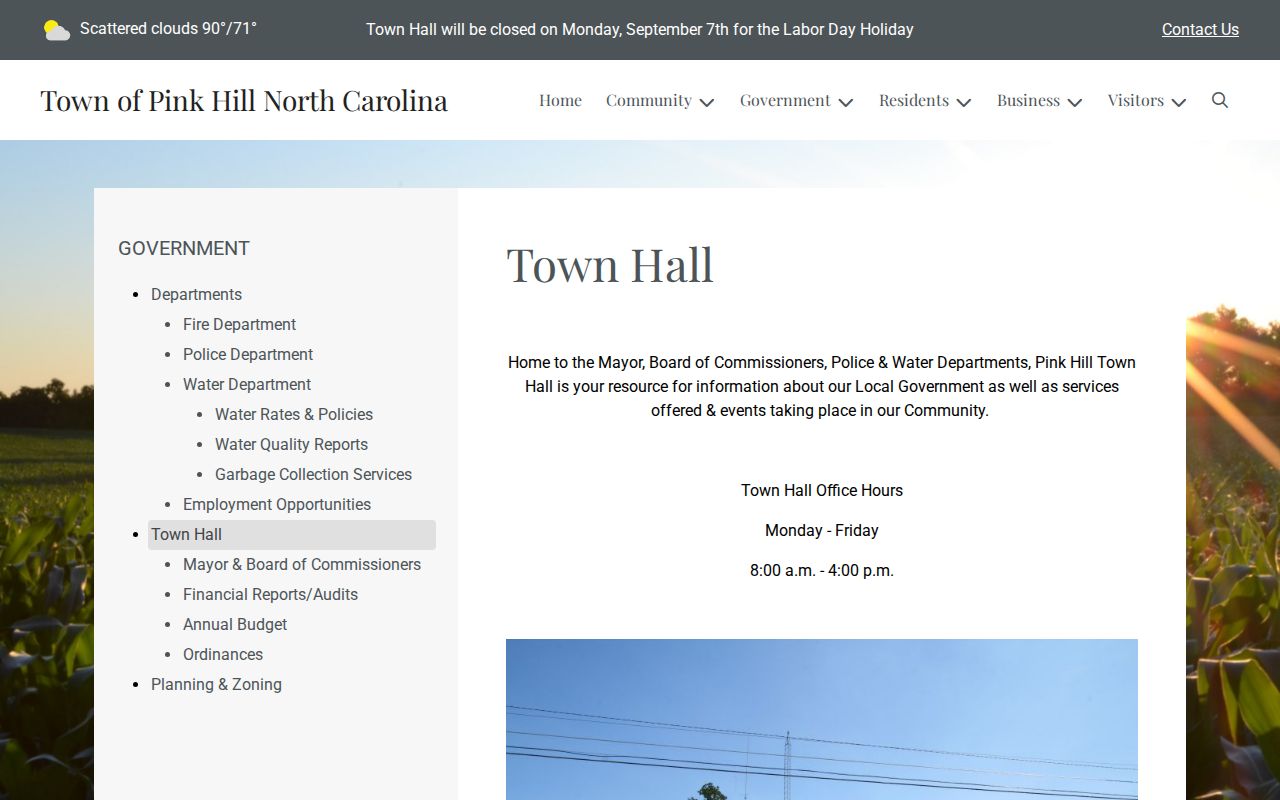
Pink Hill's official 2024 estimate counts 451 residents, and that number says nothing about court caseloads. The docket route depends on which Lenoir court handles the matter, not the population. Grifton Town Hall offers town-government context only.

Grifton Town Hall cannot take a Lenoir court payment, issue a certified copy, or confirm a hearing date. Check the county printed on the citation before choosing a route.
Lenoir Court Docket Grifton Boundary
Grifton is the one town where a boundary-first Lenoir County court docket search matters. OSBM's July 1, 2024 cross-county figures put 147 Grifton residents in Lenoir County. That is 5.68% of the town. The remaining 2,442 residents, 94.32%, live in Pitt County. Those numbers describe population allocation, not court filings. Still, they explain why a Grifton address alone cannot tell you which court system applies. Grifton Police covers the local enforcement-contact angle.
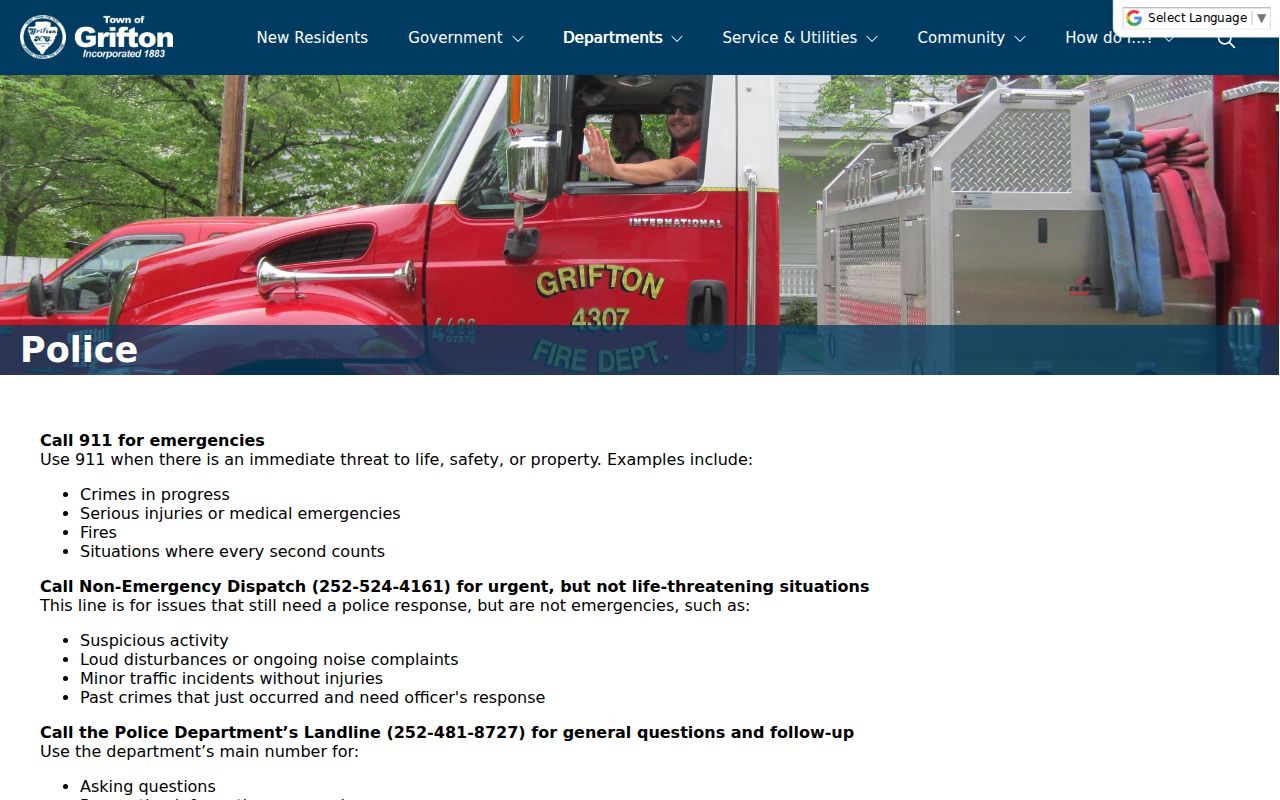
Grifton Police may have issued the ticket, but its contact page names no court. A Lenoir-side citation belongs with Lenoir District Court, the Lenoir Clerk, and the Portal's Lenoir location. For the split itself, OSBM's cross-county municipality information is the official source for the Grifton Lenoir and Pitt figures.
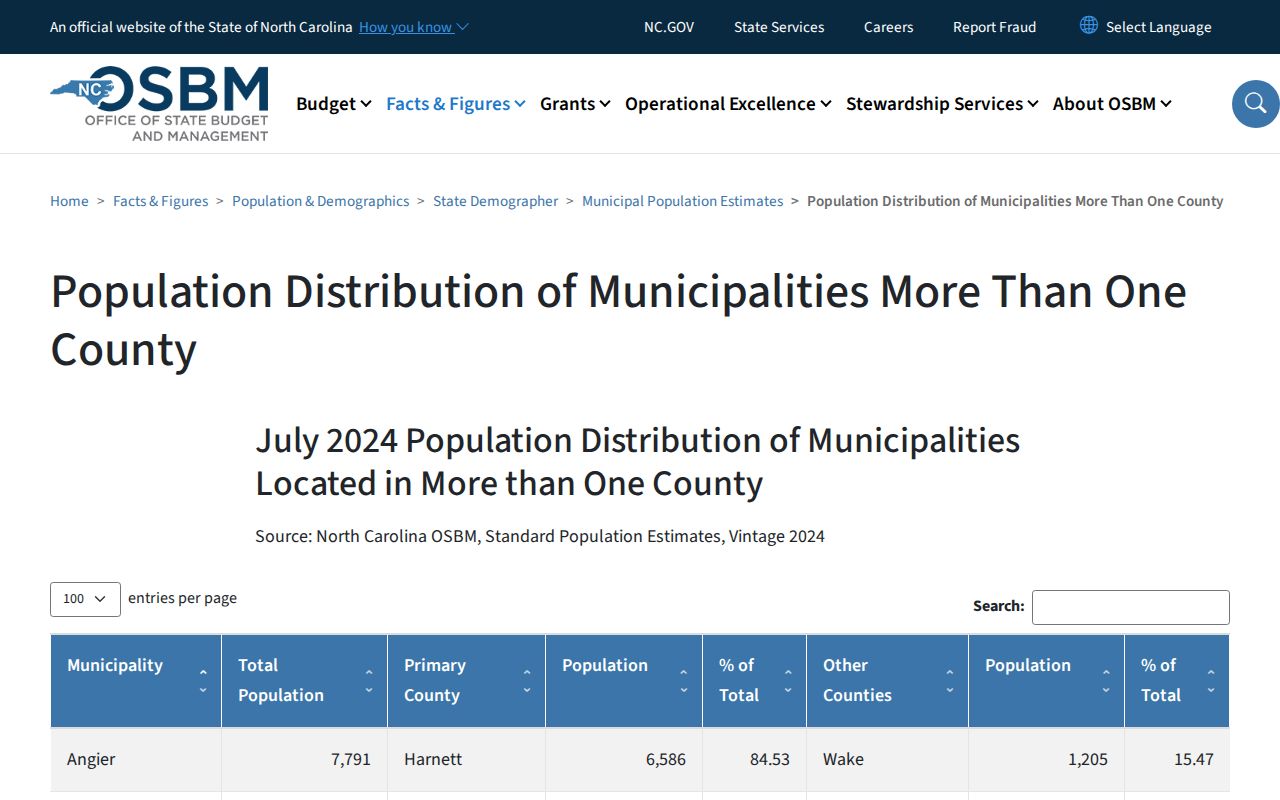
A Pitt-side Grifton case never belongs in Kinston. Before any docket search or payment, read the county printed on the citation, summons, case number, or court notice. That single word picks the clerk, calendar, and record path. Pitt County Courthouse is the documented court for a Grifton case on the Pitt side of town.
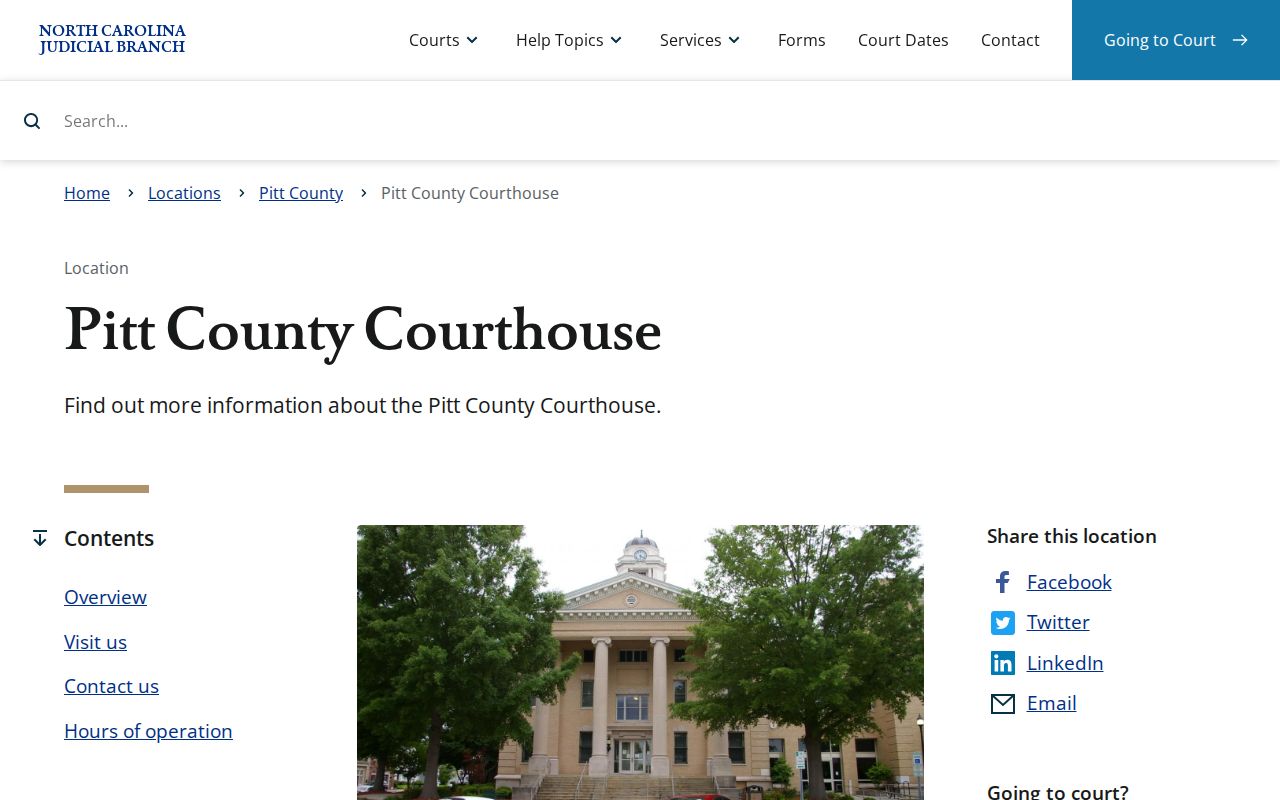
For a Grifton court docket, the Pitt courthouse is the required stop, not a backup for a Lenoir County case. The county named on the court document tells you which clerk holds the record, which calendar lists the hearing, and where payment goes.
Map and Directions to the Lenoir County Courthouse
The Clerk of Superior Court counter, along with Superior Court, District Court, estate, special-proceeding, and magistrate-connected records, is housed at the courthouse in downtown Kinston. Small claims moved into the main building's first floor, into the former County Commissioners Meeting Room, across from the District Attorney's Office and diagonally across from the Sheriff's Office, so a small-claims or magistrate visitor should head there rather than an older courtroom location.
Lenoir County Courthouse
130 S Queen St
Kinston, NC 28501
(252) 520-5300
Weekdays, 8:00 a.m. to 5:00 p.m.
Parking sits behind the building, with access on the right side near the magistrate office. No official source lists a security-screening rule or terminal count for this courthouse, so a call ahead helps for a time-sensitive or certified-copy visit.